Debunking myths on genetics and DNA

Monday, April 21, 2014

"Under My Eyelids", verses by award-winning poet Maria Grech Ganado


UNDER THE HAT ...

...holding a feather ready in her hand
to write down all she sees

a curious girl is standing
in front of two shut doors

she knows that to choose one
she'd have to split her heart

she'd like to keep it whole
and small as she's herself

she shuts her eyes and trusts
the road she glimpses in them

she shuts her eyes and chooses
the road which she sees there

-- © Maria Grech Ganado
    translated from the Maltese by Maria Grech Ganado
    Appears in the collection Under My Eyelids (Midsea Books, 2014).

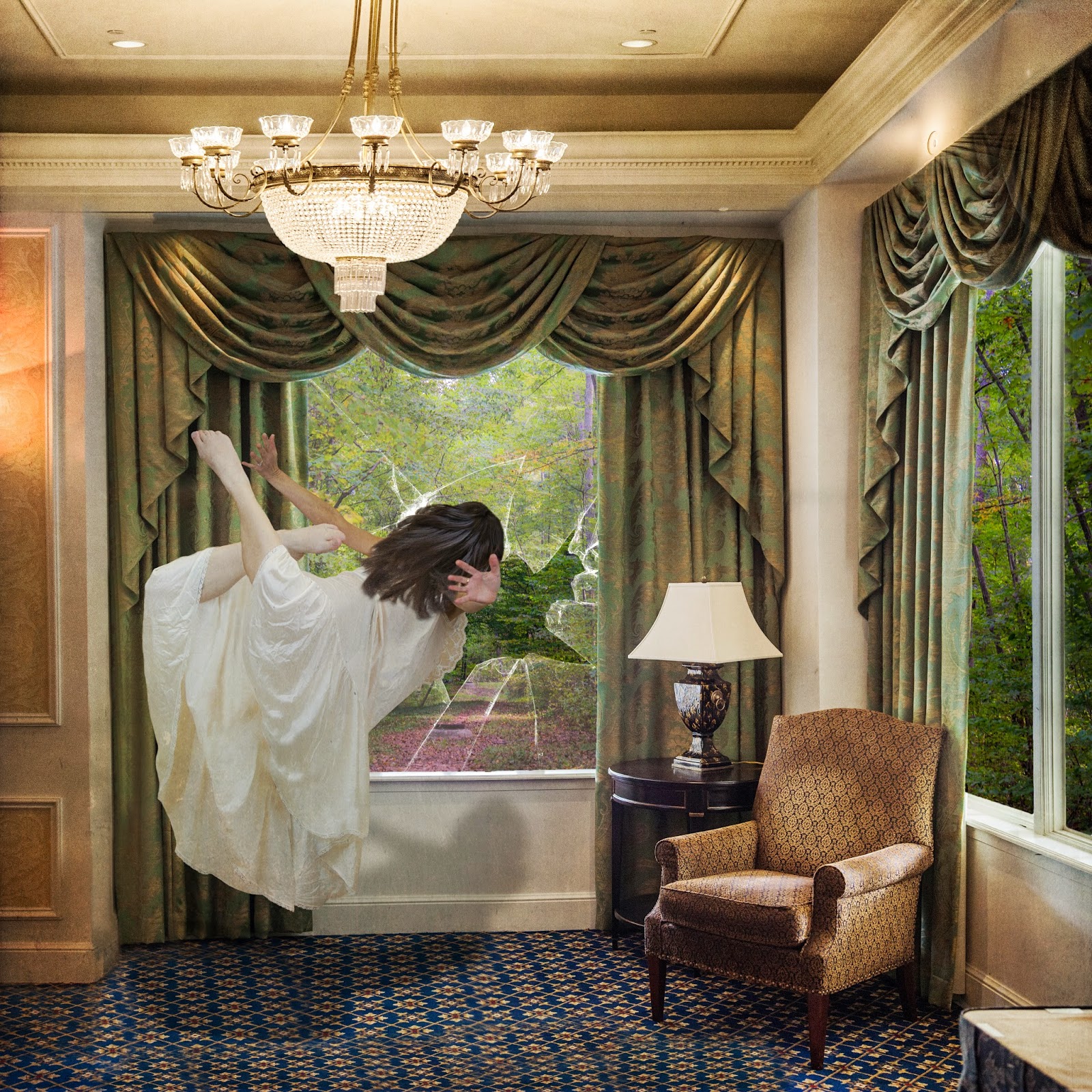
Yes, that's my self-portrait "Doors" featuring on Maria Grech Ganado's latest poetry collection titled Under My Eyelids, and the above poem, Under the Hat, is the English translation of the poem Maria wrote to accompany the picture.

Maria is an award-winning poet from Malta and I was delighted when she chose "Doors" as the cover for her latest collection. Maria writes both in Maltese and English, and her poems have been translated in 11 other languages. She received the Service to the Republic award in 2000 and has published four poetry collections in Maltese, and two in English, winning the National Book Prize in 2002 and in 2005. 

Maria and I have been chatting about words and images and we found an incredible connection. I really hope Maria can write more poems to go along my images so I can show off her talent at my next solo exhibit. In the meantime, I leave you with two more poems Maria wrote: Peter Pan, from an earlier collection titled Ribcage, and Wonderland, from Under My Eyelids. All poems posted here with Maria's permission.

                   
"Breaking Free" © EEG
                                  

PETER PAN
(11th December 1998)

By the time you flew into the story, 
I'd been Wendy for several years.  
I'd tried the window countless times before, 
flapped fiercely, fallen, felt my bruises 
and made my wry determined way back up the stairs.

Older, I spent the days embroidering stars on cushions, 
nights trying to count them in the skies.  
I never gave up hope.  But by the time 
you flew into the story, I had thought up
a new, secure, investing kind of game.

I'd invent shapes like creatures I'd imagined, 
blow words, ideas into them -  a yen for texture, 
warp and woof, and mattresses of paper under which
I'd hide the pea.  And then I'd sew my soul on 
like a shadow and try to help them fly.

Before I'd make it to the window 
the shadow would drop off.  
Why can't it drop off you?  

I've shoved and pulled.  Has practice made
my stitching that  much firmer?  I've tried 
to dive into your mind so fast I'd make it 
to your feet.  But still the stitches hold
and, what's more, you've found the pea, 

digested it!  I can't live with shut windows.  
If you should fly away, shadow and all, 
should I give up and lose my need of flight? 
grow old on pea-less mattresses? and die respectably
as mature mortals do?  Or should I risk another fall,

try one more time - follow my soul - not you?

-- © Maria Grech Ganado
    Appears in the collection Ribcage


"Down the Rabbit Hole" © EEG


WONDERLAND
She answered
Rouse me from this sleep
much longer than a hundred years

Giddy, I took a step backward
where I'd dreamt of the white rabbit
at that instant when we'd fallen
into a black hole (I'd thought)
because I was dazzled

gather the night around you
like an embrace--
stop and reflect

the star which you'e been chasing
for two thousand years
is obviously a quasar after all

I told her "No, I never lost my heart, you know.
All I did was swallow it down like water
when you confused me through the years.
How strange, it was always here in my breast.

Now that I've found it once more, come
kiss me and get up--it's late.
The garden waits."


-- © Maria Grech Ganado
    translated from the Maltese by Maria Grech Ganado
    Appears in the collection Under My Eyelids


Sunday, April 20, 2014

Was Lamarck right after all? A look at epigenetic inheritance

Myths © EEG

From the Wikipedia definition of epigenetics:
"In biology, and specifically genetics, epigenetics is the study of heritable changes in gene activity that are not caused by changes in the DNA sequence."
Wait a minute... how can we inherit anything that's not encoded in the DNA? All the information we inherit from our parents is coded in the DNA ... Right?

That's correct. However, there's something very important that goes hand in hand with the information contained in the genes: how and when to use those genes. Not all genes are expressed in all cells at all times: different cells express different genes, depending on the tissue and function they need to fulfill. Epigenetics studies the changes inside the nucleus that determine which genes are expressed and which are, instead, silenced. It turns out, these changes happen throughout our life. And even though they are not "written" in our DNA, in some instances these acquired changed can indeed be passed on to future generations.

This should be surprising. A mouse that loses its tail can still have offsprings with tails because the loss of the tail has not altered the DNA inside the mouse's cells. Yet, studies have altered in a similar way the eye color in fruit flies and the coat color in mice and shown that the changes were preserved in the next generation. In humans, there have been studies indicating that changes established not only through the mother's diet, but even through the father's diet could possibly affect the health of the embryo and be carried down to future generations.
"Animal models have also revealed that these diet-induced epigenetic changes are not limited to one generation, but can ripple down to descendants. Females with an increased disposition to metabolic problems during pregnancy can transfer this to their offspring [3]."
Why is this relevant? Because some of these changes can increase the risk of diseases like cancer.

For years we've been looking at associations between genetic variants and disease risks. Yet for most of the observed heritable diseases and cancers no responsible genes or alleles have been found. Could this be because the majority of heritable diseases are caused not by genetic mutations, but by epigenetic ones?

As Heard and Martienssen state in a recent review Cell [1]:
"Since the human genome was sequenced, the term epigenetics is increasingly being associated with the hope that we are more than just the sum of our genes [1]."
Epigenetics makes you rethink genetics. Back in school we studied that Darwin was right and Lamarck was wrong: Lamarck's view of evolution was that phenotypes developed out of necessity to survive to the environment. For example, according to Lamarck, giraffes developed a long neck because they kept reaching for higher branches when feeding, and then this acquired trait was passed on to the next generations. Darwin, on the other hand, pointed out that the longer neck was just a random trait that appeared at some point during the evolution of giraffes. Giraffes with longer necks experienced an advantage over the ones with shorter necks because they could reach for better food. The long-neck giraffes had an advantage and had more and stronger offsprings than short-neck giraffes, and were therefore selected for.

This view has led to two common misconceptions:

Misconception #1: All genes we have today have been selected for. This is absolutely not true. Many of the mutations we see in the human genome today are due to random drift, basically the "reshuffling" of genes that happens from one generation to the next.

Misconception #2: The environment cannot change our genome and therefore environmental exposures on one generation bear no effect on the following generation. Though this is what Darwin taught us, today we know that Lamarck was not completely wrong after all: while the environment cannot change our genes, it can indeed alter the way the genes work, and these changes can indeed be passed on to future generation. This has been the most surprising lesson epigenetics has taught us in the past few decades.

Jean-Baptiste Lamarck was wrong because acquired traits cannot be inherited -- they need to be encoded in the genome in order to be passed on to the next generation. If you cut the tail of a mouse, the offsprings will still have tails. The theory that giraffes elongated their necks by stretching it farther to higher branches and that by doing so, their offsprings would naturally acquire a longer neck is wrong. However, it's interesting to note that Lamarck was a botanist and plants do employ epigenetics to pass acquired traits on to the next generation, a phenomenon called "epigenetic inheritance."

The key point is this: the environment cannot change our genome, but it can indeed change the way our genes work (the "epigenome"). Epigenetics studies how these changes can be inherited across generations without being encoded in the genome.

The paradox is the following: we, as individuals, constantly adapt to the environment around us. The best example is certainly the immune system, which, throughout our lifetime, learns to recognize pathogens and kill them. So, what pathogens we are exposed to can induce epigenetic changes. Stress and diet can also affect our metabolism through, again, epigenetic changes. These environment-induced changes affect different cells in our body. Yet, when an offspring is conceived, the very first cells during embryonic development have to be completely reset as they are the cells that will make all different organs in the new organism. It's like completely erasing your hard drive so you can start over. Mother nature does that through a mechanism called "epigenetic reprogramming:" all the lifelong acquired information from the parents is erased in the germline (cells that originate oocytes and spermcytes) and erased again during the first phases of embryonic development.
Epigenetic changes not only take place during embryonic development, but also throughout the lifetime of an organism. The same mechanisms—notably DNA methylation and histone modification—have a role in the acquisition and maintenance of epigenetic changes induced by dietary or other environmental factors. [...] For a long time, scientists assumed that these environmentally induced changes lasted, at most, for the lifetime of the individual organism, but did not influence its offspring because gametogenesis would ‘wipe the slate clean' and the offspring would inherit a completely unadulterated set of genes. However, the specific mechanisms that cause the epigenetic modification of gene expression are now known to be involved in non-Mendelian—i.e. non-genetic—inheritance [3].
Though the mechanism of "epigenetic inheritance" is not yet fully understood, scientists hypothesize that it could happen during this reprogramming when some markers are not completely erased. Another theory is that the intestinal flora could be transmitting information across generations. And finally, the information could be carried on to the next generation through modifications in the RNA.

[1] Heard E, & Martienssen RA (2014). Transgenerational Epigenetic Inheritance: Myths and Mechanisms. Cell, 157 (1), 95-109 PMID: 24679529
[2] Lim JP, & Brunet A (2013). Bridging the transgenerational gap with epigenetic memory. Trends in genetics : TIG, 29 (3), 176-86 PMID: 23410786
[3] Hunter, P. (2008). We are what we eat. The link between diet, evolution and non-genetic inheritance EMBO reports, 9 (5), 413-415 DOI: 10.1038/embor.2008.61

ResearchBlogging.org

Saturday, April 19, 2014

CHIMERAS Sunday snippet #8


From CHIMERAS, beginning of Chapter 11:
I rolled over and faced Hortensia’s pale shoulders, the soft bulges of her spine drawing a sinuous line all the way down to the small of her back. She turned—the hem of the sheets printed on her right cheek—and stared at me aloof, her parted lips an invitation to be devoured all over again.
“You missed a call,” she scolded, rubbing her eyes.
No point in asking why she didn’t tell me earlier. Whatever does not concern her, Hortensia does by inertia -- when she even bothers.
I reached over to grab the mobile on the nightstand and snapped it open, surfing through the list of calls. Diane Kyle, the display informed me.
If sex is a catharsis, love is a catastrophe.
I tossed the phone on the pillow and got out of bed, meandering through the stacks of painted canvases piled against the walls.

The above is my Sunday snippet submission for the Weekend writer Warriors (you can find the Snippet Sunday group also on Facebook, too). Check them out, it's a fun way to find upcoming books -- all genres welcome, there's something for everyone's tastes.

CHIMERAS, the first in a detective thriller series featuring LAPD Detective Track Presius, is now available in Kindle and paperback on Amazon.

Click to download sample chapters (ePub, Kindle and PDF available).

Book Description: Haunted by the girl he couldn't save in his youth, and the murder he committed to avenge her, Detective Track Presius has a unique gift: the vision and sense of smell of a predator. When a series of apparently unrelated murders reel him into the depths of genetic research, Track feels more than a call to duty. Children are dying, children who, like himself, could have been healthy, and yet something, at some point, went terribly wrong. For Track, saving the innocent becomes a quest for redemption. The only way he can come to terms with his dark past is to understand his true nature.


Friday, April 18, 2014

Acoustic lasers, tomatoes, and spaceships: Endi Webb talks about his life between writing and physics


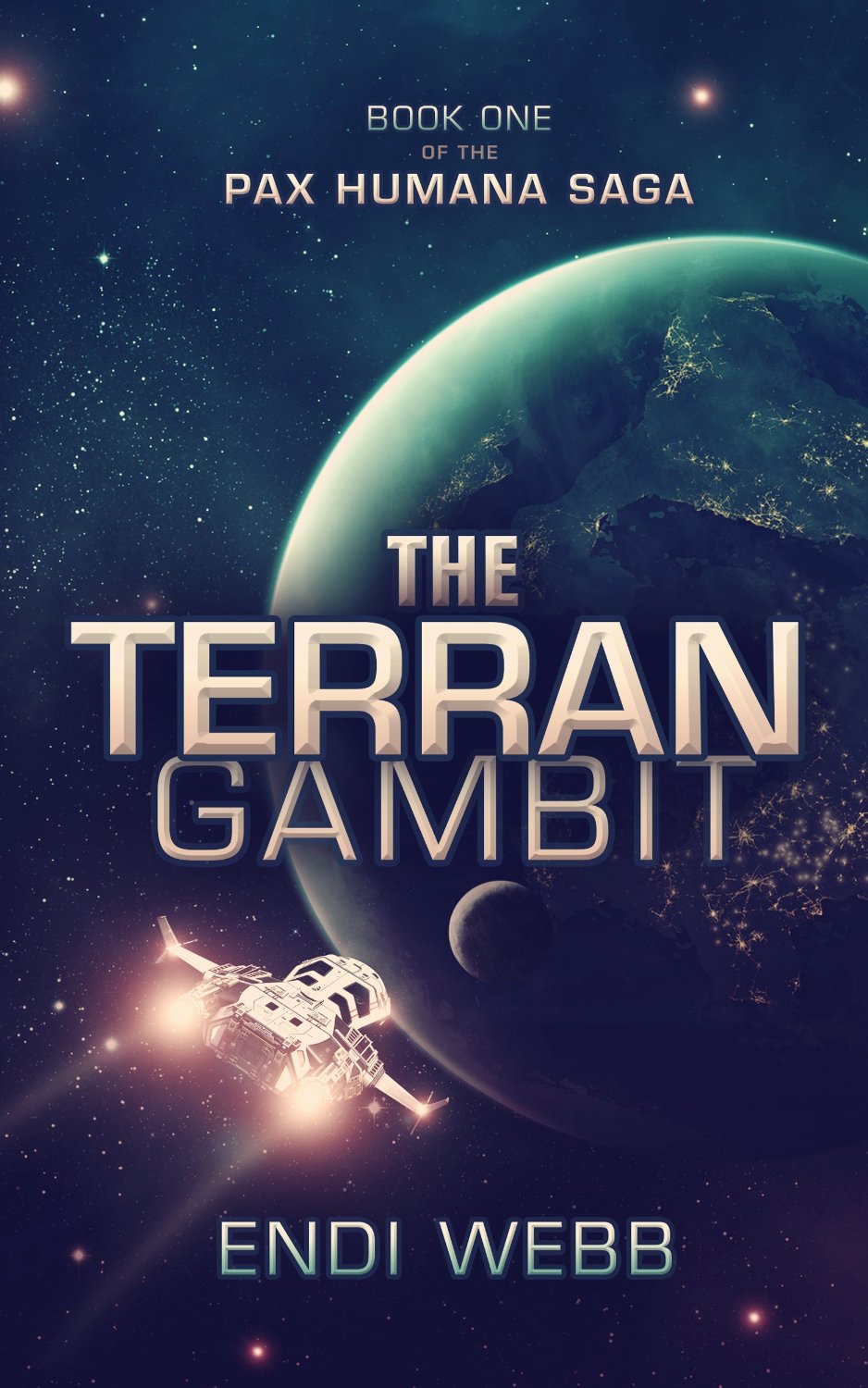
If you've been closely watching Kindle book rankings on Amazon this month, as I have (ahem), you may have noticed a new star rising: The Terran Gambit, Book I in the Pax Humana Saga, came out on March 19 and quickly rose to the top 10 Kindle books in 4 different science fiction categories! Author Endi Webb is not only an accomplished science-fiction writer, but also an experimental physicist with whom, turns out, I share a common recent employer -- small world, right?

So, of course, Endi had to be my next guest here on CHIMERAS! Welcome, Endi!

EEG: From your bio: "At work, he gets to make nano-materials (really small things) with giant lasers and highly pressurized gas. His clients include NASA, the defense department, and many other government agencies that don't like to be advertised."
Let 's talk about the science you do: you work on nanotechnology, correct? What do you make, exactly, can you tell us? And what are some of the most fun things you get to do on your job?


EW: Hmm... I'm not sure how much I should say, but I study chemical vapor deposition processes, and their effect on material properties: grain size, conductivity, tensile strength, optical properties, etc. When I was an undergraduate, one of the first lab experiences I had was helping to set up a DC magnetron sputtering system, and sputter vanadium metal onto a substrate. It was one of the most magical experiences of my life. I grew up watching Star Trek TNG, and as I saw the argon light up into a beautiful purple plasma it felt like I was living a dream aboard the Enterprise. Needless to say, I was hooked.

Ever since then I've worked on a wide variety of experimental physics projects. My PhD was in thermo-acoustics, and I designed acoustic heat engines that could convert sound into electricity. Kind of like an acoustic laser. Later, I got to work with huge lasers to do.... stuff. Like, 400 watts of high quality 532 nanometer light, focused down into very small areas to create crazy high temperature gradients. Good times. But I think the best part about being a scientist is that I get paid to have fun in a physics lab and play with lasers and crap. I mean, seriously, they pay me for this stuff! It's crazy.

EEG: You are a scientist and a science lover -- how does science inspire your stories?

EW: I love science, both real and otherwise. You know during all the old Star Trek TNG episodes when Geordi or Data would start spouting off some techy mumbo jumbo, and the joke was that the audience was probably glazing its eyes over? Yeah, those were my favorite parts. In fact, one of the most disappointing parts of my physics classes was discovering that tachyons are not real.

In my books, I try to let the science inspire the story, without governing it. I mean, I write about a group of rebels trying to take down a galactic empire. Faster than light travel must be used, and any space battle must have things like bright red and blue beams pounding down on enemy starships. But I try to at least base them in science. I borrowed Isaac Asimov's "gravitics", and actually tried to come up with a theoretical framework for how gravitic drives might function. Yeah, I'm a nerd. And there is a crazy Feynman-esque scientist in the story who tries to explain the gravitic drive to the dunce of a captain, but it's done in a way with a wink and a nod to the reader that they're not supposed to get it. It's more of an homage to all the times that Geordi and Data spouted off their stuff.

So, in brief, I try to throw just enough science into the stories to give them some plausibility, and to make them fun for readers who like science as much as I do, but not so much to make it a boring reading experience for the average reader.

EEG: Your new release, The Terran Gambit is really hot right now: top 10 in three different sci-fi categories in Amazon Kindle books! Congratulations! How does that feel? And what are your plans for this new series?

EW: Actually, 4 different categories! And for a few days it was 5! Honestly, it feels a little surreal. The day I hit #507 in the whole Amazon store was just a little unreal, especially when I looked up the author rankings in SciFi. There I was, tucked right in between Isaac Asimov and Frank Herbert. Seriously? This is a joke, right? Obviously, that bump didn't last, but lots of people are still buying this book, for which I'm extremely grateful.

The series will have 10 books, and if the fans clamor for more, there might be spinoffs. I also give all my mailing list subscribers free access to all the short stories I write in this universe, and I'll be adding to that collection over the coming year. Book 2 comes out in mid-May.

EEG: Why do you write?

EW: Honestly? I needed a hobby. Don't get me wrong, I've always had the little voice in the back of my head that said I should write novels, and I've even started a couple over the years. But after a particularly long video game binge two and half years ago (curse you, Skyrim!), I sat down and realized I was wasting my life. I mean, I really, really like videogames, and I'll probably always play them, but in that moment I added up all the time I'd spent in the previous 6 months, and it was.... embarrassing. So for my new years resolution, I decided I wanted to do something "big". I didn't know what "big" meant at the time, but it had to be life changing. A huge accomplishment. I wrote down a list of ideas, and writing a novel came out on top. So for 3 weeks I did nothing but write, the result of which was my first novel that I published, The Rohvim, Book 1: Metal and Flesh. After several months of editing, and a re-write of the first 30%, it actually came out to be a pretty good book.

Needless to say, after writing a novel in 3 weeks, I caught the bug. Bad. I followed up with a sequel, and that Rohvim series will probably end up with at least 2 trilogies. But my first love is Space Opera, and I made the switch to that in November last year for NanoWriMo. The Terran Gambit was the result.

EEG: Hehe, I completely understand. I need a hobby, too. One, that is. ;-)
Ok, I have to ask. What's up with tomatoes? :-)


EW: I love tomatoes. Don't judge me! But seriously, I really like tomatoes. One year living in Los Alamos, I grew 127 plants. No joke. Last year I only grew like 37, but here in Alabama, 37 tomato plants is equivalent to 7,400 plants in the high desert of NM. We had to start giving them away. It was glorious.
I love experimenting with all the thousands of varieties available. When the seed catalogue arrives in December, I go through that thing like other men go through a playboy. I hold it up sideways and just stare at it, paging through slowly and ogling all the beautiful reds and oranges and yellows and purples. My dream is to retire to a tomato farm and be a hermit writer/tomato grower. Kind of like how Captain Picard retires to his vineyards after captaining the Enterprise. Only with fewer starships and phasers.

EEG: Haha, that would be fun! Thank you, Endi, for being with us today!

You can follow Endi and his adventures in writing, acoustic lasers and tomato farming on his blog, Facebook, and Twitter (@endiwebb).

Thursday, April 17, 2014

The week in the blogosphere and giveaway continued

Upper Antelope Canyon © EEG

This week I continued my promotional blog tour. Here's where you can find the posts:
UPCOMING:
CHIMERAS will be featured in numerous websites dedicated to indie books. I'm listing them here as they are a fantastic way to discover new authors and get cheap books. In fact, many of these fantastic books are free. I encourage all book lovers out there to check-out the websites and subscribe to their newsletter so you can keep your Kindle loaded and happy. :-)

And here's again the details of the current giveaway.
ENTER THE GIVEAWAY FOR A CHANCE TO WIN AN AUTOGRAPHED PAPERBACK COPY OF CHIMERAS (two Kindle copies also available).

a Rafflecopter giveaway

Wednesday, April 16, 2014

Carnival of Evolution to be hosted here on CHIMERAS!


Fellow science bloggers, the next Carnival of Evolution will be hosted right here on CHIMERAS on May 1st. The Carnival of Evolution is a monthly event that highlights some of the most interesting blog posts about biological evolution. The Carnival is hosted by a different blog every month. You can find last month's Carnival here.

So wear your Darwinian hats and send the links to your evolution blog posts to eegiorgi (at) gmail.com or submit them as a comment to the Facebook page. You can also submit the links in the comments here.

Can't wait to read!

Monday, April 14, 2014

For the love of science: Dr. Amy Rogers talks about science thrillers and a new publishing company dedicated to science writing


You know I'm always excited to find fellow scientists who write, but when I met Amy Rogers and learned all that she does to advocate for "real science" in fiction I was ecstatic. Amy is a medical doctor, a scientist, writer, critic, and, as she states in her website, "a relentless promoter of scientific literacy." Amy not only writes science thrillers herself (her book Petroplague explores the world of bioengineered bacteria), but she promotes all science thrillers through her website ScienceThrillers.com. Wait, it gets better: Amy is about to launch a new publishing company completely dedicated to scientifically grounded fiction. Science writers and readers rejoice!

I'm really honored to have Amy here on CHIMERAS today to discuss her book, science writing, and of course her publishing company. Welcome, Amy!

EEG: The premise of your book, PETROPLAGUE, comes from real, ongoing research on biofuels: bacteria that can be bioengineered to produce oil-like substances. You took this premise and turned it into an apocalyptic scenario of what would happen if America were suddenly deprived of oil. Tell us a bit of how you had the idea for this book.

AR: When most people hear the word “microbiology,” if they think anything at all, they think of “germs.” The common understanding of bacteria is that they make you sick. But this is a narrow, skewed vision of the microbial world. When I taught microbiology at California State University, my goal was to convince students that disease-causing microbes are minor players. Bacteria are far more diverse, and far more powerful, than the few examples that infect humans.

In particular, bacteria are capable of performing just about any chemical reaction. Some bacteria break down hydrocarbons (petroleum) and naturally clean up oil spills. Others produce hydrocarbons and could be used to manufacture renewable petroleum substitutes.

That got me wondering. Why don’t naturally-occurring bacteria that “eat” oil get into our fuel supply and “spoil” our gasoline? And what would happen if they did?

Around that time, people in Los Angeles were using the words “carpocalypse” and “carmageddon” to describe the temporary closure of a major local interstate. America’s most car-dependent city, which also is a major oil-producing region, became the obvious choice of setting for my novel PETROPLAGUE.

EEG: Are you currently working on a new novel?

AR: My next novel REVERTANT will be released in early fall 2014. As with PETROPLAGUE, real microbiology is central to the plot of REVERTANT.

In REVERTANT, an American scientist travels to a medical tourism hospital in Mexico to test a risky new treatment on a boy dying of an incurable disease. When the hospital is taken over by a brutal drug gang and a rabies-like virus infects her colleague, she must solve a medical mystery and put her life on the line to protect the child.

Gene therapy, bad guys, chimpanzees, and a really good dog are all part of the tale. I like to think REVERTANT combines the kind of scientific detective story found in Michael Crichton’s THE ANDROMEDA STRAIN with the surgery phobia of Robin Cook’s COMA.

EEG: I love your website ScienceThrillers.com and how you "relentlessly" promote science literacy. That's also my mission here on CHIMERAS! There are so many intriguing premises that spur from real science, yet most traditionally published "science-y" books are based on bogus science. Why do you think that is? Do you think people are scared of "real" science?

AR: There are two sides to your question: producers and consumers. Why do writers use bogus science? And do readers avoid real science in the stories they read for fun?

As far as readers go, all I need to say is Michael Crichton’s Jurassic Park.

Readers don’t avoid science. They’re attracted to great stories. If a writer has the ability to combine a great story with real science, readers will respond.

The problem with writing good scientific fiction is a mismatch of skills. The people who understand science deeply enough to use it realistically in a story are generally scientists or educators, not full-time writers. Many writers find science interesting and would like to use it in their stories, but they lack the technical expertise to write about it well. So they make it up. And often get it wrong. In my experience reviewing over a hundred science-themed thrillers at ScienceThrillers.com, writers can get help correcting the details of their science, but scientist-writers like Crichton display a unique depth of understanding in the way they weave science into their plots.

EEG: How can we make a stronger message that science is in fact sexy and fun?

AR: As writers of science-themed fiction, we’re doing it! Through much of the 20th century, the entertainment industry portrayed scientists as male, mad, and malevolent. Today, when geek has become cool and Bill Gates is the world’s richest man, it’s time to recast the scientist stereotype in books and movies.

We need great stories that will capture the public’s imagination. Those stories must feature compelling, realistic characters who are also scientists, engineers, mathematicians, or physicians. Science in plots should enhance the reader’s understanding of general scientific principles, not undermine it with nonsense.

EEG: You’ve launched a new publishing company, ScienceThrillers Media. STM is dedicated to science-y fiction, specializing "in stories with scientific or medical themes, and stories with protagonists who are scientists, mathematicians, engineers, or physicians." As you explain in your website, your emphasis is on "science thrillers" rather than the speculative stuff most people think of as "science fiction." ScienceThrillers Media is a "hybrid" publisher, offering authors the option of a traditional, advance-paying contract or an indie-style arrangement with higher royalties. Tell us more about STM and how the company plans to distribute the acquired titles.

AR: As you say, ScienceThrillers Media is a new, boutique publisher that will specialize in stories (primarily fiction but also narrative nonfiction) that have realistic science in the plot. Thrillers are a popular part of this genre, but STM will also consider mysteries, romance, historicals, young adult, etc. if the book appeals to the scientifically literate audience we serve.

Traditional publishing and self publishing each have advantages and disadvantages for authors. ScienceThrillers Media will negotiate a contract that finds a balance between the two that best suits the individual desires and skills of a particular writer for a particular book.

ScienceThrillers Media titles are published in both digital and paper formats. Our ebooks are distributed through amazon, bn.com, Apple/iBookstore, and Kobo, and many smaller and foreign e-tailers as well. Our trade paperbacks are distributed through Ingram, amazon, Baker & Taylor, Barnes & Noble, Espresso, and various global partners. STM can’t guarantee placement of books in bricks-and-mortar stores, but we do offer booksellers a generous discount and return policy, just like the major publishers, and we will promote our catalog through industry channels to get our authors’ work in front of buyers.

If you write scientific fiction or popular science nonfiction, send us a query. No literary agent required.

EEG: That's fantastic. Thank you, Amy, for stopping by, and most importantly, thank you for advocating the importance of "real" science in books as well as in our everyday life.


Amy Rogers, MD, PhD, is a Harvard-educated writer, scientist, educator, and critic. Through her book review website, her publishing company ScienceThrillers Media, and her own science thriller writing, Amy advocates for literate entertainment in the form of great stories with real science.


Sunday, April 13, 2014

The week in the blogosphere and another giveaway!

Horseshoe Bend, AZ © EEG

It's been quite a week! CHIMERAS is finally live on Amazon, both in paper and in Kindle. Check out the giveaway at the end of the post -- you can win one autographed print copy of CHIMERAS!

To help spread the word about the book, here are some guest posts and interviews that I did this week and some that are about to come:

And here are the details for the giveaway:
a Rafflecopter giveaway

Thursday, April 10, 2014

Aluminum adjuvants in vaccines: are they safe?

Multnomah Falls, © EEG

Disclaimer: I work on HIV vaccine design and I'm quite proud of it. I know that for three million HIV-positive kids in Africa, a vaccine is the only hope they have to grow into adulthood. So, when people tell me that vaccines are bad I cringe. Infant mortality rates have dropped since vaccinations have been introduced. We live longer, healthier lives thanks to vaccines. Diseases like polio can paralyze and kill, yet they are no longer a concern for children in the western world.

At the same time, I'm fully aware that medicine is not a science. When it comes to the human body, there are no certainties. We use statistics to measure effects, but statistics do not give you a yes/no answer: they give you averages, trends, probabilities. And as parents, we need to make decisions for our kids, not for the average child.

So, when my friend Autumn Kalquist asked me about aluminum and vaccines, I started digging up the literature right away.

In layman terms, this is how a vaccine works: the goal is to teach the immune system to recognize a certain pathogen, whether it is a virus, a bacteria, or a cancer cell. To do so, we take bits of proteins from the pathogen and we make sure that the immune system sees them. Since it's not the whole pathogen that's injected inside the organism, but only some of its proteins, the pathogen cannot mount an infection. On the other hand, the immune system will recognize the proteins as "extraneous" and will start making antibodies able to bind to them. The beauty of this mechanism is that once the immune system finds an antibody that perfectly matches the extraneous protein, the information will be stored in its "memory." Next time the immune system will come across the same protein -- this time from the whole pathogen -- it will be able to retrieve the "memory" of the right antibodies to use against the proteins. the antibodies will bind to them and initiate the process that leads to the destruction of the pathogen.

While the principle seems "straightforward", there are many obstacles to overcome when designing a vaccine. The first one of course is to select the right proteins that will elicit a strong enough immune response. This has proven particularly challenging in HIV because of the virus's extreme variability. Since no two viruses are identical, proteins from one particular virus are never enough to mount a response that's protective against all kinds of HIV strains.

But even when the virus is not as variable as HIV there are other challenges: the fact that you inject something inside the body doesn't automatically guarantee that the immune system will see it. In some cases the pathogen proteins alone are not enough to recruit a strong enough immune response. In these cases, additional molecules are added to the vaccine: these molecules, called adjuvants, are able to initiate signals that in turn alert the immune system to recruit lymphocytes.

And this is where we get to the controversy: many effective adjuvants contain aluminum, which for some has been a cause for concern. Though aluminum is quite efficient at stimulating the immune system, in high doses it can cause serious neurodevelopment damage. This is particularly true for small children since their growing brains are more permeable to toxic substances.

Are vaccines containing aluminum safe, then?

First of all, let me say that I'm appalled that the question is raised with regards to vaccines, but nobody seems to take notice that tattoo ink contains aluminum, too. I guess tattoos never had the pretense to save lives. So while it's not worth taking chances with aluminum to save a life, it's totally worth doing it in the name of skin branding? 

Back to vaccines: as it often happens when you try to address such questions, you start digging for information and you find both "yes" and "no" answers.

People who think they are safe tend to reason that (1) they've been used for over seventy years and by now we would've noticed if they weren't; (2) we are constantly exposed to aluminum since it is found in many foods, food additives and in foods prepared with aluminum utensils.

But you'll also find people who quite adamantly state that aluminum containing adjuvants are not safe since the vaccine doses are higher than the recommended IV solution doses. My friend Autumn brought to my attention Dr. Sears' position and questioned the comparison he makes:
The first document (see Resource 1) I came across discusses labeling of aluminum content in injected dextrose solutions (a sugar solution added to IVs in the hospital). [. . .] The second document (see Resource 2) discusses aluminum content in IV feeding solutions (called TPN). The FDA requires these solutions to have no more than 25 micrograms of aluminum in each liter of solution.
Currently used vaccines contain between 125 and 850 micrograms.

So, who's right?

The first thing one should do when setting off on a quest like this is make sure that we are comparing apples to apples and oranges to oranges. The arguments above are both wrong because the aluminum contained in vaccines is administered through intra-muscular injection, which is quite different than ingesting it with foods or receiving it through an intra-venous solution. In other words, both arguments above are comparing apples with oranges.

Aluminum in food might be safe to consume because our guts tend to be a quite efficient barrier that will ensure that not all of it will be absorbed into the bloodstream. On the other hand, as Autumn rightfully noticed, it's incorrect to compare intra-venous dilutions to intra-muscular injections: intra-venous solutions better have the lowest possible doses of aluminum since whatever you gets injected immediately enters the blood flow.

Animal studies have shown that aluminum administered through intra-muscular injections can take up to a month to be released into the blood stream [1]. This slow release and clearance ensures that at any given time during that month the circulating levels are much lower than the total level of aluminum contained in the original dose. In fact, in [1], author HogenEsch cites studies that have found aluminum based vaccines to induce fewer local reactions than vaccines without the adjuvant, a phenomenon that could be due to the fact that aluminum stimulates the immune response (which is why it's used in vaccines in the first place).

To play devil's advocate I also found a paper that, contrary to HogenEsch's review, raises a red flag against aluminum adjuvants. The authors, Tomljenovic and Shaw [2], compared ASD (autism spectrum disorder) prevalence from the US, UK, Australia, Canada, Sweden, Finland and Iceland, and contrasted it with the cumulative aluminum doses received through childhood vaccinations in each country. The authors found a strong correlation between cumulative exposure to aluminum through vaccines and higher ASD prevalence, and claimed that, based on Hill's criteria, this correlation is a strong statement in favor of causation.

Let's pause for a moment and make one thing clear: correlations DO NOT PROVE causation. A classical example is the correlation between crime rates and ice cream sales: they seem to rise at the same time during the year, and that time of the year happens to be summer. But it's pretty obvious that ice cream sales do not cause a rise in crime rates. However, the researchers in [2] argue that:
"The positive correlation between Al exposure from vaccines and prevalence of ASD does not necessarily imply causation. However, if the correlation is strong (criterion 1), consistent (criterion 2) and if
there is a biologically plausible mechanism by which it can be explained (criterion6),as well as an appropriate temporal relationship between the proposed cause and the outcome (criterion 4), then the satisfaction of these criteria supports the notion that the two events may indeed be causally related. Our results satisfy not only all four of these criteria applicable for establishing causation in neuropsychiatry,but also four others. These additional criteria are: (5) biological gradient, (7) coherence with the current knowledge, (8) experimental or semi-experimental evidence and (9) the analogy with similar evidence [2]."
The above discussion is sensible, but it still does not take away the fact that the correlation they've found DOES NOT prove causation. The only way you could prove a causal relationship here would be to have an animal model and an experimental setting with several groups receiving increasing doses of aluminum. You then measure the prevalence of ASD in each group. Until we have such an experiment we cannot rule out the multiple factors that could possibly bias this correlation. For example, ASD diagnoses have been rising in the past decades because of better diagnostics tests.

At the same time, while Tomljenovic and Shaw DO NOT PROVE that aluminum adjuvants cause autism, they do raise some interesting points. The adjuvants are needed because without them the vaccines are not effective. However, part of the problem is that immune responses in infants under 6 months of age are weaker. Those are also the most delicate months from the neurodevelopment perspective, making the organism more fragile to aluminum exposure. So maybe one needed intervention could be to revisit the vaccination schedule in infants. I'm not a medical doctor, so I can't make any recommendations, but, as a parent, I do wonder: is it strictly necessary to vaccinate infants starting from their first day in the world as it's done in the US? Could we maybe wait a few months? Would this be too dangerous for babies in nurseries?

While none of this discussion brings a definitive answer, I hope it does provide food for thought. Clearly, if these adjuvants have been used for over 70 years, the vast majority of the population can tolerate them pretty well. The problem, of course, is that as parents, our children are not "the vast majority." They are individuals and we want the very best for them. I think that there is a lesson to learn here. First, we need more dialogue between the researchers, the medical providers, the FDA, and the parents. The debate lately has been too "black and white", whereas any time I try to dig into the literature I see too many grays. This is not a matter one can address with a definitive yes or a definitive no. My best advice is: (1) don't limit yourself to one opinion only, not even when it comes from a reputable source; (2) read a lot, read from all sources, and then use your best judgement based on your family history and your children's health history; (3) allow yourself some leeway. For example, if a stronger vaccine is necessary under 6 months of age, if there is a family history of ASD, it may be worth considering the pros and cons of delaying the vaccine schedule. Or maybe start off with the non-aluminum vaccines, like polio, for example.

And remember: your decision will affect not just your kids but also, to some level, the rest of the population. If you have a family history of ASD and/or immunological problems, by all means, take precautions. Your kids will still be protected by the phenomenon called "herd immunity" so long as the majority of the population keeps getting vaccinated. For the rest of us, the fact that vaccines have benefitted us all as a population should be undeniable.

If you like the content of this blog, please consider supporting me by purchasing my new book release, the detective thriller CHIMERAS. Thank you.

[1] Hogenesch H (2012). Mechanism of immunopotentiation and safety of aluminum adjuvants. Frontiers in immunology, 3 PMID: 23335921

[2] Tomljenovic L, & Shaw CA (2011). Do aluminum vaccine adjuvants contribute to the rising prevalence of autism? Journal of inorganic biochemistry, 105 (11), 1489-99 PMID: 22099159

ResearchBlogging.org

Wednesday, April 9, 2014

Medical care, genetics, and love -- a perfect blend in Carol Cassella's latest novel Gemini


My guest today is a practicing physician, a Wall Street Journal Expert Panelist, a member of the Global Burn Care team of volunteer doctors who travel yearly to Bhutan to provide reconstructive surgery and local training, a national bestselling novelist, and the mother of two sets of twins, one fraternal and one identical.

I interviewed bestselling author Carol Wiley Cassella the first time in 2011. I had just read Carol's first novel, Oxygen, a suspenseful medical mystery that keeps you turning the page, and I was instantly captivated by Carol's writing.

Carol is now back with a new compelling novel, Gemini, the emotional story of two women whose lives are bound to intersect in the most incredible way. But what's really incredible is that, despite her numerous commitments and jobs, Carol is extremely generous with her time and, once again, she graciously accepted to be my guest here on CHIMERAS.

Welcome back, Carol!

EEG: From the first pages of Gemini we are confronted with one of the worst nightmares from both a patient's and a physician's perspective, as intense care physician Charlotte Reese struggles to reanimate an unconscious, unidentified woman under her care. Carol, you said about Gemini that one of your goals when writing the book was to "make medicine realistic but also comprehensible," and that you wanted to narrow "the gap between translation of medical care from doctor to patient." In your experience, how big of an issue is this gap? Is medicine too complicated or are humans too complicated?

CWC: I think the gap is huge! Yes, humans and medical science are both complicated, but the bigger problem is a lack of time in our often frantically paced healthcare system. I see two things happen over and over: first, doctors don't have time to thoroughly explain the disease, the causes and likely outcomes, the alternative options for treatments, and then listen to all questions and address them. I think most doctors do their best, but there is often a huge amount of material to cover. Second, patients are often distressed and not able to fully comprehend, process and remember what they are told. Studies have shown that a relatively small amount of provided information is retained by patients. It's a good idea to take notes or, with permission, record conversations with your doctor. Go to appointments with questions written out in advance, so you don't forget to ask them. If possible, ask if a nurse or physician's assistant is available for extra time to explain all options, risks and benefits. Our health is so critical to our well being and sense of fulfillment in life, and when it fails we want explanations and a sense of realistic hope. While the Internet has plenty of information, it is very hard to apply it to your own situation with any real perspective, and I often see it lead to more worry than resolution.

EEG: As an anesthesiologist, despite being so incredibly important in the OR, you end up spending probably the least of time with your patients, compared to your fellow physicians. I wonder if, among all other things, this shortness of time with your patients has endowed you with a longing that inspires your stories... Is that so? As if your imagination tried to fill in the gaps?

CWC: That's a fascinating question that I'd never really considered. I do pack a lot into the ten or fifteen minutes I spend with a patient before they go to sleep for surgery, and often find myself wishing I knew them better. I was an internist before I was an anesthesiologist, and I really enjoyed having a deeper, ongoing relationship with my patients and their families. However, I found it frustrating and stressful to be managing hundreds of patients at the same time. As an anesthesiologist I'm only responsible for one person's life at any particular moment, so I'm able to fully concentrate on their care and end the day knowing I accomplished something good and completed my task. But I do find myself imagining more about their backgrounds and their lives than I'm able to learn in my brief visit with them. I don't use any real patients in my novels, but as writer I'm constantly trolling for ideas--bits of real life--that I can weave into my novels. More often than not I get them from news papers, my own life, or (every writer's secret source) eavesdropping!

EEG: Your writing is flawless, with a special attention for details. You often have words for ordinary things that have me pause in awe because I wouldn't even know how to describe such everyday details. Whether it's a landscape or a dialogue, your writing feels very intimate, and your characters very real. You are such an attentive observer that I can't help but wonder: do you do any kind of visual arts besides writing?

CWC: Thank you--I value that comment more than you can know! I barely have time to brush my teeth, so, no, I don't do any other kind of visual art. I would say that I enjoy observing nature and people keenly, and I love the puzzle of capturing that in words on a page. That, to me, is one of the most enjoyable parts of writing. But even if I can't perform any other artistic feat, I get both great pleasure and inspiration from theater, dance, film and music.

EEG: You wrote Oxygen in first person present, Healer in third present, and Gemini in a very intimate, omniscient voice. Is the POV/tense something you plan ahead or do you go with whatever wants to be written on the spot? If it is planned, do you like to challenge yourself with something different with every story?

CWC: With each book I have written an early draft from a different POV than the final, published book used. I seem to need to experiment by attacking a story from different angles, then "listening" to how the voice sounds on the page. Ultimately the story dictates what POV I use. Oxygen was such an immediate, personal story that I chose the less common first person present tense, which allowed the reader to discover the story along with the protagonist. With Gemini I wanted to show too many "off screen" facts and details to use first person, but I still wanted it to be intimate, so I stuck with close third. It is fun to challenge myself with different voices--I wouldn't want to repeat the same craft technique with each novel.

EEG: What are you working on right now? What's next in your writing goals?

CWC: My next novel is set in the world of global public health. I love writing about medicine and don't feel anywhere close to exhausting that enormous topic, and global health has been a personal interest most of my professional life. I'm particularly interested in how some of our most noble, magnanimous ideas can become hindered when we apply our logical and historically successful western health models to other cultures. Sometimes we fix one problem only to create two more. But still, the world is so small and closely connected these days, and health problems on the other side of the planet ultimately affect all of us in one way or another. We can't just stand by and wait while people in other countries needlessly die.

EEG: I hear you and I greatly admire what you do. Making sure we don't forget that there are parts of the world where children still die because of poor or inaccessible health care is our mission. My supervisor gives talks around the world about HIV, and she always begins showing pictures of the AIDS orphans in Africa. We can all make a difference and the first step is to raise awareness.

Thank you so much, Carol, for stopping by today, and thank you for enriching our lives with your suspensful and thought-provoking books. Find Carol on Facebook and learn more about her books by visiting her website.


Monday, April 7, 2014

Launch week -- write a review and enter a sweepstake!


So this is it. My book is now live on Amazon. <Inhales sharply, lets out a sigh.>

Now, here's the thing: what really helps a book pick up are reviews. Lots of them. The number of stars does not matter. So long as the reviews keep coming, the Amazon algorithm will pick up the book and make it more visible.

Bottom line: I'm really grateful for anyone taking the time to write a review, and I want to show my gratitude with a sweepstake. Read on to see how it works.

PRIZE: an 8x10 (or larger*) print of your choice from my photography website, matted and autographed OR a $25 amazon gift card (whichever you prefer).

* some images may not be fit for the 8x10 crop, in which case the print will be larger to accommodate the crop.

HOW TO ENTER:

  • Buy the book (or, if you can read the Kindle format, you can still request an ARC copy, details here).
  • Write an honest review on Amazon.
  • Come back to this post and let me know in the comments. If you want to write the review anonymously, that's perfectly fine, just give me an identifier in the comment so I can find your review and make sure nobody else claims it.
  • Enter your info in the Rafflecopter widget below (that way the drawing will be blinded and non-biased because Rafflecopter will do it for me).
  • Not mandatory, but you get bonus points if you tell a friend, share on FB, share on Twitter, share whichever way you want, just share.  
BONUS: If by July 30 I've reached 50 reviews or more, I will draw two winners instead of just one. If by July 30 I've reached 100 reviews, I'll be so ecstatic that I'll draw FOUR winners instead of just one or two. So, you see, you can't lose by sharing and spreading the word because the more reviews I get the better your chances to win.

Stil questions? Scroll down and you'll find the FAQ right below the Rafflecopter widget.

a Rafflecopter giveaway


FAQ

* How long will the sweepstake be open?

Until July 30, 2014.

* Does it matter what edition of your book (Kindle or print) I buy?

No.

* How do I write an Amazon review?

Make sure you are logged into your Amazon account. Click here, and then scroll down: below the last review you'll see a button that looks like this:

Click on it and you'll see the field where to type your review. Type, pick the number of stars, click submit. Done.

* I didn't like your book and I wrote a negative review. Can I still enter your sweepstake?

Absolutely! So long as your review is honest, of course. I do reserve the right to exclude reviews that have foul language and/or are hateful and/or disrespectful, though usually Amazon filters those out already.  Other than that, if that's how you felt about the book, by all means. I appreciate anyone who takes the time to write an honest review. I will randomly draw one (or more, see "bonus" above) winner(s) from everyone who wrote a review.

* What if I wrote an anonymous review?

Give me some identifier, like for example: "My review begins with the words ... "

* I wrote the review on Goodreads. Does that count?

Thanks so much for the review! It's easier for me to keep track of one place only, so I ask you to please cut and paste the Goodreads review on Amazon and then come tell me in the comments. Thank you!

* Can I choose any image for sale on your website?

Yes. When you go to my website you will find anything from landscapes, flowers, and composites. The only exception would be clients' portraits since those are personal and not for sale.

* I shared this post. How do I get bonus points?

First, write the review. Then come back to this post, and tell me in the comments: (1) how to find your review; (2) how to find your share.

* What does "matted and autographed" mean?

It means the print will be mounted on a foam core back and it will have a 2-inch mat all around. I will sign the mat in a corner so you know the print is authentic.

* How will I know if I am a winner?

I will post the results here on the blog sometime in August. I will use whatever name/pseudonym you used on the review and I will ask you to contact me privately with the details of where to ship the prize and the image of your choice. If you think you might miss the post, I suggest you subscribe via email to the blog (look for the "Follow by Email" button on the right column).

* I don't care about your print. Do you have anything else to offer?

If you are a winner and don't want a matted print I'll send you a $25 amazon gift card.

* I wrote the review but I didn't say so in the comments. Am I still taking part in the sweepstake?

Thanks so much for writing the review! Rafflecopter will draw the random winner(s) from anyone who enters through the widget above, so unless you comment on this post to let me know which one is your review you cannot be entered in the sweepstake.

That's it. If you have questions, ask them in the comments! Thanks so much for the support!

Priceless advice from award winning photographer Laurie Rubin: "Photograph from your heart, not your head. It will show in your images."

A picture is worth a thousand words, and that's why instead of telling you how excited I am about my guest today, I'm going to show you through a sample of her work.

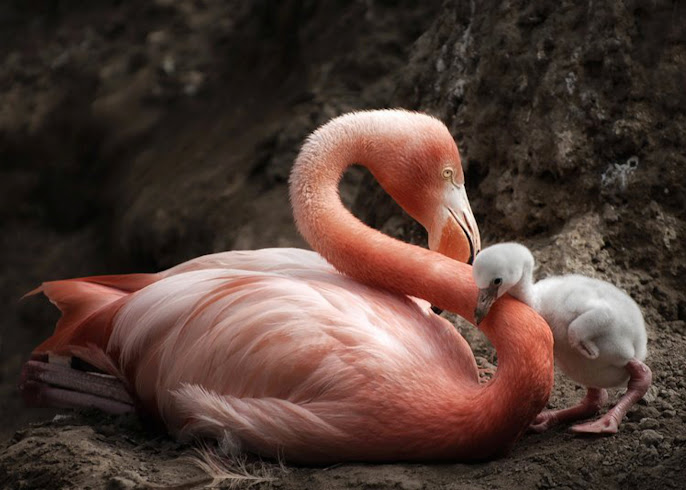
A Little Tenderness © Laurie Rubin

Run For It © Laurie Rubin

The Dreamer © Laurie Rubin

Award-winning photographer Laurie Rubin captures wildlife like no other: just look at the tenderness between the flamingo mom and her chick -- it's priceless! The image placed first in the "Best of Nature" award, while the following tender moment between a mother gorilla and her baby:

Read to your kids © Laurie Rubin

was the 1st Place Category Winner for the Windland Smith Rich International Award and is currently displayed at the Smithsonian Natural History Museum.

EEG: Congratulations Laurie, it's such a great honor to have you here on CHIMERAS today!

Tell us a bit about your background and how you discovered photography as your passion: if I'm not mistaken, you started as a computer artist, correct?


LAR: I started right out of college after graduating from San Diego State with an emphasis in Graphic Design as a Computer Artist, creating presentation graphics and training for large companies in San Diego at Crystal Image Productions. I've been in the software industry my entire career and have worked at companies such as Aldus/Adobe on the team for Gallery Effects, and Gryphon Software the makers of Morph Software and edutainment software for Disney, Warner Brothers and HBO. I worked at Nik Software for almost 8 years as the Education Project Manager, helping photographers and enthusiasts learn how to make beautiful images during the post-processing phase. Nik Software was acquired by Google a couple years ago and I was one of a handful of people from the San Diego office that was relocated in Mountain View to work with the Google+ Photos Team.

My photography "A-ha!" moment happened on the first day I started working at Nik Software, when Product Manager, Josh Haftel, opened the consignment closet and showed me all the Nikon cameras and lenses I could borrow. He took out the Nikon D2H and put a 24-70mm lens on it. When I looked through the viewfinder, I knew that was what I wanted my world to look like. I've never been the same since!

EEG: Since you worked for Nik Software -- what's your take on post-processing images?

LAR: I have a saying... "Photography is art - whether it is realistic or artistic, it is your vision, what you saw at that moment. You can choose to leave it as is, or enhance it to bring out the feeling of the moment. The choice is yours." - Laurie Rubin

I believe that we should always strive to get-it-right out of the camera the first time, but more times then not, enhancing an image during post-processing will bring out the details and help to recreate what you felt at the moment of capture. By adding a bit of structure, a slight vignette, and a touch of adjustments, that can help to bring out the best in your images. It helps to create your unique look and style and to connect with your viewers. Everyone of my images, I have enhanced, wether it is to reduce noise, add a creative effect or perhaps a bit of selective sharpening.

EEG: I couldn't agree more! Tell us about "Read to your kids," the image that won the Windland Smith Rich International Award and is currently displayed at the Smithsonian Natural History Museum.

LAR: This was a once in a lifetime shot! I just happened to photograph the baby gorilla’s mom holding a magazine as she stopped to look at a photo of her baby (sitting next to her). This was one of the enrichment items that the zookeepers put in their enclosure. I visited the gorillas almost every weekend and each time, there was a new behavior, the light was different, or they had new items to play with. It does take patience, but if you go as soon as the doors open, the animals are most active and you can avoid the crowds.

EEG: All of your work is amazing, but what I love the most are your wildlife images: you are able to capture the most intimate and spontaneous moments between animals, as if you weren't even there, probing with your lens. How do you achieve that, other than, like you said, having a lot of patience?

LAR: Thank you! Yes, photographing animals takes a LOT of patience! But I am often richly rewarded by spending that extra quiet time with them, waiting for a particular behavior and direct eye contact. I don't try to get their attention, but I stay with them and watch and learn. Often times, when I am going out to photograph a particular animal, something else appears before my lens that was totally unexpected. I love it when that happens! I am all about capturing moments and being able to share those with others. There is a connection with animals that I get when I take the time to just "be" in the their presence.

EEG: What suggestions/recommendations do you have to anyone getting started in photography? What about for those who want to branch out into wildlife photography in particular?

LAR: My best advice is to pick up a camera, whatever you have and go out and take pictures. The old saying "Practice Makes Perfect" applies to all genres of photography. You're not going to get better by not making this a consistent exercise in actually making mistakes to find out what works for you. Follow and learn from photographers whose work you admire. We have so many amazing photographers, offering workshops and training online. I've been blessed to have known, learned and photographed alongside some of the best photographers in the world.

Discover what your passion is... and if it is wildlife, make it your mission to get out among the animals with your camera. Watch and learn their behaviors and take a LOT of photos. Share your photos online to see what people like. This helps to take away your personal emotional ties to some of your images. For example, we might like one of our images because we were somewhere special, or it reminds us of who we were with. Try entering some contests, or get published in a magazine or book or get your prints in a gallery.

Most of all... have fun, be in the moment and photograph from your heart, not your head. It will show in your images.

EEG: It certainly shows in your images, Laurie! Thank you for sharing your thoughts with us today and mostly, thank you for sharing the beauty you capture with your lens.

Find more gorgeous images by Laurie on her website, on G+ and on Facebook.

Saturday, April 5, 2014

CHIMERAS Sunday Snippet #8


From CHIMERAS, Chapter 3:
Rhesus stares at the pistol. He wavers, for no more than a second, then snags the weapon and storms out of the car.

The bang. And then another, and another.

Rhesus slams the trunk shut and returns inside the car. He is sweating heavily, dizzy from the rush -- intoxicated. His face is sprayed with blood and gunpowder, so are his clothes.

The reek of a new initiation, the aspersion of a blasphemous baptism.

The above is my Sunday snippet submission for the Weekend writer Warriors (you can find the Snippet Sunday group also on Facebook, too). Check them out, it's a fun way to find upcoming books -- all genres welcome, there's something for everyone's tastes.

CHIMERAS is the first in a detective thriller series featuring LAPD Detective Track Presius. To be sure not to miss the release date, subscribe to the blog posts in the main page. To request an ARC (advanced reserved copy), in exchange for an honest review to be posted on amazon or goodreads, send an email to eegiorgi(at)gmail.com with the subject line "ARC copy."

Click to download sample chapters (ePub, Kindle and PDF available).

Book Description: Haunted by the girl he couldn't save in his youth, and the murder he committed to avenge her, Detective Track Presius has a unique gift: the vision and sense of smell of a predator. When a series of apparently unrelated murders reel him into the depths of genetic research, Track feels more than a call to duty. Children are dying, children who, like himself, could have been healthy, and yet something, at some point, went terribly wrong. For Track, saving the innocent becomes a quest for redemption. The only way he can come to terms with his dark past is to understand his true nature.

You can find CHIMERAS on Goodreads.
Details on how to order your free advanced copy here.

The immortality paradox

"Untold stories" © EEG

This is an old post, which I originally wrote in response to a friend's question. I'm reposting today because it's one of the topics you will discover in the plot of my detective thriller CHIMERAS, which will be released on Amazon next week. Here's the question my friend Tim raised:

Is it true that our cells die and are replaced every 7 days? Now it is my understanding that as we age the memory of the cells is that of the previous cell’s age. Can we turn off that memory and allow the cell to be a youthful one that replaces our older one or to replace them in such a way as not to age or at least not as rapidly?

Every cell in our body undergoes a certain number of replications before it dies. In children, cells replicate ten, maybe twenty times. By the time we reach our senior years, cells replicate once or twice and then die.

The "memory" Tim's talking about is the telomere, a non-coding part of the DNA that sits at the end of our chromosomes. Every time cells duplicate, the telomeres shorten: they lose about 100 base pairs with every cell division, until they reach a point that "signals" it's time for the cell to die. This mechanism prevents cells from replicating too many times, as each replication carries a certain risk of damaging the DNA. Telomeres shorten as we age, hence our cells undergo less replication cycles. What keeps us young is the ability of cells to regenerate.

Now, here's the interesting bit. There's an enzyme, called telomerase, which allows for the replacement of the telomeres. Not all our cells have this enzyme. It's expressed where it's most needed: in embryonic cells, because those cells need to divide many times in order to form a new person; in the immune system; in tissues that undergo periodic renewal.

So, if shorter telomeres means less cell divisions, and less cell divisions implies faster aging, could we possibly tweak this enzyme to keep the telomeres from shortening and effectively slow down aging?

Researchers from the Dana-Farber Cancer Institute [1] engineered telomerase-deficient mice by knocking out the TERT gene, which codes the telomerase enzyme. These mice, inbred through several generations, showed considerable damage to several organs, tissue atrophy, and half the life span of normal mice. The researchers then devised a clever way to reactivate the enzyme by activating TERT transcription only in the presence of a molecule called 4-OHT. In the presence of 4-OHT, in vitro cell cultures showed that the telomerese ends lengthened and cell proliferation resumed. Furthermore, after a 4-week treatment with the 4-OHT molecule, the degenerative damage induced by the lack of telomerase in the the knock-out mice was considerably reversed and their life span lengthened:
"Telomerase reactivation in such late generation TERT-ER mice extends telomeres, reduces DNA damage signalling and associated cellular checkpoint responses, allows resumption of proliferation in quiescent cultures, and eliminates degenerative phenotypes across multiple organs including testes, spleens and intestines."
Do the telomeres hold the secret of eternal youth, then? All we would need to do is use the telomerase enzyme to prevent the telomeres from shortening ...

Unfortunately, there's a catch in all this. It's called cancer.

A cancer cell is a cell that replicates abnormally. In 1951 George Otto Gey took a few cancer cells from his patient Henrietta Lacks and propagated them in vitro. That cell line, called HeLa cells, is still alive today (I'm sure you've all heard or read Rebecca Skloot's wonderful book The Immortal Life of Henrietta Lacks). Henrietta's cells, placed on a feeding substrate, continue to replicate. If you did the same experiment with healthy cells, the cell line would eventually die because of aging. But the HeLa cells don't. They don't age. Why? You've guessed it. The telomere ends never shorten and there's no signal for the cell to die.

Bottom line: a cell that never dies is a cancerous cell. That's the immortality paradox.

It reminds me of Jorge Luis Borges's story, The Immortal. I was in high school when I read it the first time, and I clearly remember that until then it had never occurred to me that immortality could be such a sad state of mind as in Borges's story. All fantasy stories I had read portrayed immortality as a god-like quality. I think Borges was onto something.

[1] Jaskelioff M, Muller FL, Paik JH, Thomas E, Jiang S, Adams AC, Sahin E, Kost-Alimova M, Protopopov A, Cadiñanos J, Horner JW, Maratos-Flier E, & Depinho RA (2011). Telomerase reactivation reverses tissue degeneration in aged telomerase-deficient mice. Nature, 469 (7328), 102-6 PMID: 21113150

[2] Hartwig FP, Bertoldi D, Larangeira M, & Wagner MS (2014). Up-regulating telomerase and tumor suppressors: focusing on anti-aging interventions at the population level. Aging and disease, 5 (1), 17-26 PMID: 24490113

ResearchBlogging.org

Wednesday, April 2, 2014

Insecure Writer's Support Group Day: Great stories are made from the heart


This is a monthly event organized by the Insecure Writer's Support Group. Click here to find out more about the group and sign up for the next event.

The other day a colleague congratulated me about my upcoming book. I blushed and confessed I was terrified. He frowned and asked me why.

Good question. Why?

I'm terrified of stepping out of my comfort zone. I'm terrified of what people will think of me. I'm terrified that my book will languish, ignored and unloved. And, lastly, I'm terrified because I'm alone in this. Traditionally published authors have a whole team to cover their back: the agent, the editor, the publisher, the publicist. Us indies... yes, we stick together and support one another, which is awesome. I've made so many friends already and I'm so grateful for all of your support. But let's face it: once I'll put the book out, it'll be me and my book that will be judged, not my friends.

So why am I still publishing it?
One reason: I believe in my story.

If you don't fall in love with your story and characters, how are you going to make readers fall in love with them? You might try and write something trendy, but great stories aren't made with the head only. Great stories are made from the heart. And believe me, readers can tell stories that are made from the heart from the others.

Be true to your story, be true to your characters. That was the priority for me. Still is. I had agents, I had editors interested. Some wanted X, others wanted Y. Most were scared off by the science. Sometimes you have to believe in yourself even when nobody else is willing to. Yes, self-publishing is scary. And yes, it requires a lot of work. But it also gives you the freedom to make your own choices, to fulfill your own story.

Maybe my book will never soar. But I'm publishing my book so I can finally claim that Track Presius -- and most importantly his quirks and uniqueness -- is mine. Whatever happens, I remained true to my story, and that feels good.

What about you? What's the fuel that makes you overcome your fears?


Powered by Linky Tools

Click here to enter your link and view this Linky Tools list...


CHIMERAS is the first in a detective thriller series featuring LAPD Detective Track Presius. The Kindle edition will be released on Amazon on April 9, and the paperback edition will be available starting from April 15.

Click to download sample chapters (ePub, Kindle and PDF available).

© Christopher Germano