Debunking myths on genetics and DNA

Showing posts with label ASD. Show all posts

Saturday, December 14, 2013

ASD and inflammation: more than just a correlation


There has been a lot of speculation, lately, about vaccines possibly being harmful and, in particular, causing autism. You know I work on HIV vaccine design, so there's no need to say where I stand on the need of vaccinations. No link has been found between the incidence of autism and vaccination. Of course, medicine is not an exact science. Outliers will always exist. The U.S. seem to be a special case, as the vaccination schedule in this country requires a high number of vaccine doses, yet the infant mortality rate is one of the highest among North America and European countries. However, take a close look at this graph:
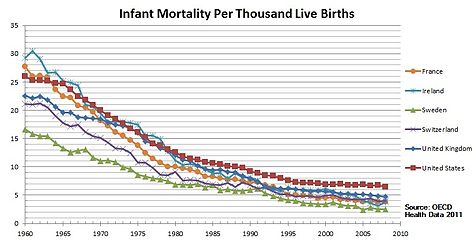

The countries with low mortality rate shown in this graph have a strict vaccination schedule, just like the U.S. On the other hand, what distinguishes them from the US is affordable health care. Countries with a high infant mortality rate are countries where poor people do not have access to vaccines and good health care. For the 3-million AIDS orphans living in sub-Saharan Africa a vaccine against HIV is the only hope they have to live into adulthood. It is quite easy for those of us who have a healthy life style and have access to food, medicines, and doctors on a daily basis, to say "no, thank you" to vaccines. But please, when you make your own decision about vaccines, do remember the millions of people for whom this is not a choice. And also remember: some children who are immunodefecient really cannot be vaccinated. They cannot contract any kind of disease, either, because their immune system is not working. However, if the majority of the people continue to get vaccinated, people who really cannot be vaccinated are still protected:

found on Facebook

Back to autism. As you saw from my last post, ASD, or autism spectrum disorders, is indeed a puzzling disease and pinning down its etiology has been challenging. The genetics involve numerous genes and diverse pathways, implying that different mechanisms could potentially lead to ASD, particularly during fetal development. One thing that I recently discovered is a number of correlations found between infections in the mother during gestation and autism:
"Recent studies have highlighted a connection between infection during pregnancy and the increased risk of autism in the offspring. Parallel studies of cerebral spinal fluid, blood and postmortem brains reveal an ongoing, hyper-responsive inflammatory-like state in many young as well as adult autism subjects. There are also indications of gastrointestinal problems in at least a subset of autistic children [1]."
In his review [1], Patterson makes a good summary of the relevant studies: for example, a permanent, inflammatory-like state has been found in postmortem examination of ASD affected brains. This was found at all ages, indicating that the state was established early in the development and maintained throughout the life-span of the ASD affected individual. These abnormalities expand to the central nervous system and the peripheral immune system affecting also the gastrointestinal tract:
"These findings include immune cell infiltrates present in the colon, ileum and duodenum, as well as increased T cell activation in the intestinal mucosa. These inflammatory changes are associated with autoimmune responses that could contribute to the observations of decreased mucosal integrity, or 'leaky gut' [1]."
"Abnormal activation of the immune system may also be involved in the etiology of autism. [. . .] Family members of autistic children, particularly the mothers, show a higher incidence of allergy or autoimmune diseases. Consistent with immune involvement are findings that maternal infection is a risk factor for autism [2]."
In conclusion, there is a correlation between immune abnormalities and ASD, and the immune abnormalities propagate to the brain and the gastrointestinal tract. However, it is unclear if these abnormalities cause the behavioral symptoms of ASD or if they are a secondary effect. The health and well-being of our immune system has such deep, profound effects on the central nervous system. The two interact very closely together: stress and the general emotional status, for example, can affect immunity; vice versa, the immune system can influence behavior. Both our brain and our immune system constantly learn and readapt to the surrounding environment (for example, our immune system learns to recognize new pathogens throughout our lifetime), which makes them prone to life-long epigenetic changes induced by environmental factors such as stress and disease. It's not a coincidence that:
"Immune dysregulation has also been implicated in the etiology of a variety of neurodegenerative, psychiatric, and neurodevelopmental disorders, including Parkinson, Huntington, and Alzheimer diseases, multiple sclerosis, major depression, schizophrenia, and addiction [2]."
Hsiao et al. [2] addressed the open question of whether the immunological abnormalities cause ASD-like behaviors in a mouse model. They induced ASD in mouse offspring through "maternal immune activation" (MIA): the immune system of pregnant mice was altered and then the offsprings of the altered mice that were behaviorally abnormal was compared to the offsprings of the controls. The behaviorally abnormal MIA offsprings exhibited core behavioral symptoms of autism, including increased repetitive behaviors, decreased social interactions, and increased anxiety. Hsiao et al. found several abnormalities in the immune system of these MIA offsprings: levels of regulatory T-cells were decreased and CD4+ T-cells were hyper-responsive. These abnormalities could not be transferred to healthy mice through a bone marrow from the MIA mice. However, when irradiated and transplanted with immunologically normal bone marrow, many of the behavioral abnormalities stopped. This would suggest that the immunological dysregulation causes the ASD-like behaviors.
"It is striking that in a mouse model of an autism environmental risk factor that exhibits the cardinal behavioral and neuropathological symptoms of autism, there is also permanent peripheral immune dysregulation. This finding provides the opportunity to explore molecular mechanisms underlying the relationship between brain dysfunction and altered immunity in the manifestation of abnormal behavior. Furthermore, this finding provides a platform for investigating how prenatal challenges can program long-term postnatal immunity, health, and disease. Maternal insult-mediated epigenetic modification in HSC and progenitor cells is one possible mechanism for how effects may be established by transient environmental changes yet persist permanently into adulthood. However, the BM transplant results suggest that the peripheral environment of the MIA offspring is also critical for maintaining a permanently modified immune state [2]."
We will never be able to prove or disprove a direct causal relation between vaccines and autism: if a child develops ASD after vaccination, unfortunately, we cannot rewind time and see if the same child, without the vaccine, would've never developed ASD in his/her lifetime. ASD typically develops in infancy, which is when the bulk of vaccines are administered. The risk of ASD is much higher (see last week's post) if there's already a family member with ASD, siblings in particular. And given the deep, complex interactions and reciprocal influence between the nervous system and the immune system it is quite possible that a sudden change in the immune system could cause some level of disruption in the nervous system. However, if the immune system is primed to such risk, a virus or any other pathogen, which cause changes in the immune system just like a vaccine does, could also cause similar disruptions. On the other hand, vaccines can potentially prevent infections that, according to these studies, do increase the risk of ASD in the baby during the first trimester of gestation.

So, as always: Read the literature, talk to your doctor, possibly to more than one, consider your family's medical history, and, whatever decision you make, make sure it is an informed decision.

[1] Patterson, PH (2011). Maternal infection and immune involvement in autism Trends in Molecular Medicine DOI: 10.1016/j.molmed.2011.03.001

[2] Hsiao EY, McBride SW, Chow J, Mazmanian SK, & Patterson PH (2012). Modeling an autism risk factor in mice leads to permanent immune dysregulation. Proceedings of the National Academy of Sciences of the United States of America, 109 (31), 12776-81 PMID: 22802640

ResearchBlogging.org

Sunday, December 8, 2013

Autism: not one disease but a spectrum of disorders; not one gene but a network of gene coexpressions.


"Autism spectrum disorder (ASD) is a lifelong developmental condition that affects about 1 in 110 individuals, with onset before the age of three years. It is characterized by abnormalities in communication, impaired social function, repetitive behaviors and restricted interests [1]."
ASD is more common among males than females, with a 4:1 male to female ratio. Numerous studies in the literature have shown evidence for a strong genetic component of autism, with a risk up to 25 times higher among siblings compared to the general population. However, if you look at the literature, you find that these numbers change pretty dramatically from study to study. This is often the case when you look at rare disorders in conjunction with rare mutations (WARNING: the rest of the paragraph is a statistical digression, feel free to skip to the next section). The smaller the effect you are trying to measure, the more subjects you will need in your study. This is also true if you are testing many variants, as for example in GWAS studies, which investigate variants in the whole genome. If the effect is big enough, you will find statistical support for your association, however, if your sample size is not big enough, the effect you are trying to measure will vary greatly from study to study. This is because the smaller the sample size, the larger the variance, which is stat jargon to say that whatever you are trying to measure (typically an increase in risk) is likely to be different if you repeat the study.

What do we know about the genetic etiology of ASD? About 10% of people diagnosed with ASD have some underlying genetic syndrome (including mitochondrial genes). About 5% are due to rare chromosome rearrangements, for example changes in the size, shape, or number of some chromosomes. Another 5% has been associated to both inherited and de novo "copy number variations" (CNV), the presence of extra copies of some genes [1]. CNV is not rare among humans, as it accounts for approximately 0.4% of the variation between unrelated genomes. Identical twins also differ in CNV, and, even though they have identical genomes, the copy number of the genes may differ between the two. Despite this, in some families with a history of ASD the proportion of de novo CNV's has been found to be up to five times higher than in families without a history of ASD. Finally, thanks to recent advances in sequencing technology, de novo point mutations throughout hundreds of genes have been found and implicated in about 15% of ASD cases [2].

In light of the variety of mutations, genes, and phenotypes associated with ASD, two studies published in the last issue of Cell addressed the following question:
"do these genetic loci converge on specific biological processes, and where does the phenotypic specificity of ASD arise, given its genetic overlap with intellectual disability (ID)? [2]"
"if and when, in what brain regions, and in which cell types specific groups of ASD-related mutations converge during human brain development [3]" ?
Of the two papers, I've so far only read the one by Willsey et al. [3], who combined their own data with already published data and identified 144 de novo "loss-of-function (LoF)" mutations, in other words, mutations that impair the functionality of the gene (hence the corresponding protein is no longer produced). They called genes with 2 or more de novo LoF mutations "hcASD", or "high confidence" ASD because statistically they had a high probability of being truly associated with ASD. They also analyzed a less-likely set of genes with only one de novo LoF mutation, which they called "pASD genes".

Next, the researchers investigated when and where these genes are expressed during brain development. The way they did this is a bit technical, but to think about it in simple terms think of it this way: (1) they needed samples from brain tissues taken at different developmental stages; (2) they needed to look not just at one gene, but at families of genes that are likely to interact together and influence one another's likelihood of getting turned "on" and "off". When a gene is turned "on", the gene is coding a protein, and we say that the gene is "expressed."

To carry on their analysis, Willsey et al. used data published by Kang et al. (Nature, 2011) from "57 clinically unremarkable postmortem brains of diverse ancestry (31 males, 26 females) that span 15 consecutive periods of neurodevelopment and adulthood from 5.7 postconceptual weeks (PCW) to 82 years." The gene expression values were determined for each gene by brain region and by postmortem brain sample. Brain regions were grouped according to transcriptional similarity during fetal development. These data were used to generate 52 gene coexpression networks, each network composed of the hcASD genes and their top correlated genes. This coexpression network analysis is a technique that's been extensively used lately to analyze patterns of co-expressions of genes. Each gene in the network is represented by a node, and any two nodes (genes) at any given time are connected if the genes are expressed at that time.

Using this set-up, the researchers were able to link the ASD genes to particular brain regions and developmental phases.
"Our analysis identifies robust, statistically significant evidence for convergence of the input set of hcASD and pASD risk genes in glutamatergic projection neurons in layers 5 and 6 of human midfetal prefrontal and primary motor-somatosensory cortex (PFC-MSC). Given the extensive genetic and phenotypic heterogeneity underlying ASD and the small fraction of risk genes that we have examined in this study, this likely represents only one of several such points of convergence. Nonetheless, the analytic approach presented here clarifies key variables relevant for productive functional studies of specific ASD genes carrying LoF mutations, providing an important step in moving from gene discovery to an actionable understanding of ASD biology [3]."
Cortical glutamatergic projection neurons (CPNs) are a class of neocortical neurons. They are called "projection" neurons because they transmit information from the neocortex to other neocortical and central nervous system regions. During development, projection neurons are generated in the neocortical germinal zone and migrate radially to their final neocortical position. In their study, Wyllsey et al found that the development of midfetal CPNs is particularly vulnerable to ASD. Furthermore, the set of ASD genes they identified as associated to ASD are functionally diverse and encode proteins found in distinct cell compartments, confirming the theory that ASD can be caused by different and distinct pathways.
"Given recent studies suggesting that as many as 1,000 genes or more could contribute to ASD (He et al., 2013; Iossifov et al., 2012; Sanders et al., 2012), our analysis has uncovered a surprising degree of developmental convergence. Despite starting with only nine hcASD seed genes, we have identified highly significant and robust evidence for the contribution of coexpression networks relevant to L5 and L6 CPNs in two overlapping periods of midfetal human development (3–5 and 4–6) corresponding to 10–24 PCW [3]."
The importance of these studies lies in the understanding of not just the genetic association per se, but in the mechanisms that drive these associations, and, most importantly, how the numerous genes interact and when.

[1] Devlin and Schrer (2012). Genetic architecture in autism spectrum disorder Genetics & Development DOI: 10.1016/j.gde.2012.03.002

[2] Neelroop N. Parikshak, Rui Luo, Alice Zhang, Hyejung Won, Jennifer K. Lowe, Vijayendran Chandran, Steve Horvath, Daniel H. Geschwind (2013). Integrative Functional Genomic Analyses Implicate Specific Molecular Pathways and Circuits in Autism Cell DOI: 10.1016/j.cell.2013.10.031

[3] A. Jeremy Willsey, Stephan J. Sanders, Mingfeng Li, Shan Dong, Andrew T. Tebbenkamp, Rebecca A. Muhle, Steven K. Reilly, Leon Lin, Sofia Fertuzinhos, Jeremy A. Miller, Michael T. Murtha, Candace Bichsel, Wei Niu, Justin Cotney, A. Gulhan Ercan-Sencicek, J (2013). Coexpression Networks Implicate Human Midfetal Deep Cortical Projection Neurons in the Pathogenesis of Autism Cell DOI: 10.1016/j.cell.2013.10.020

ResearchBlogging.org